
3 min read
International subsea cables are described as the backbone of the internet. But what happens when they go wrong – intentionally or accidentally? Asia is adopting a two-pronged approach to connectivity – space and sky.
Since the first transoceanic cable was laid in 1866, undersea cables that carry communications and intelligence have been prone to damage, whether through wayward anchors and fishing nets or more military-related actions.
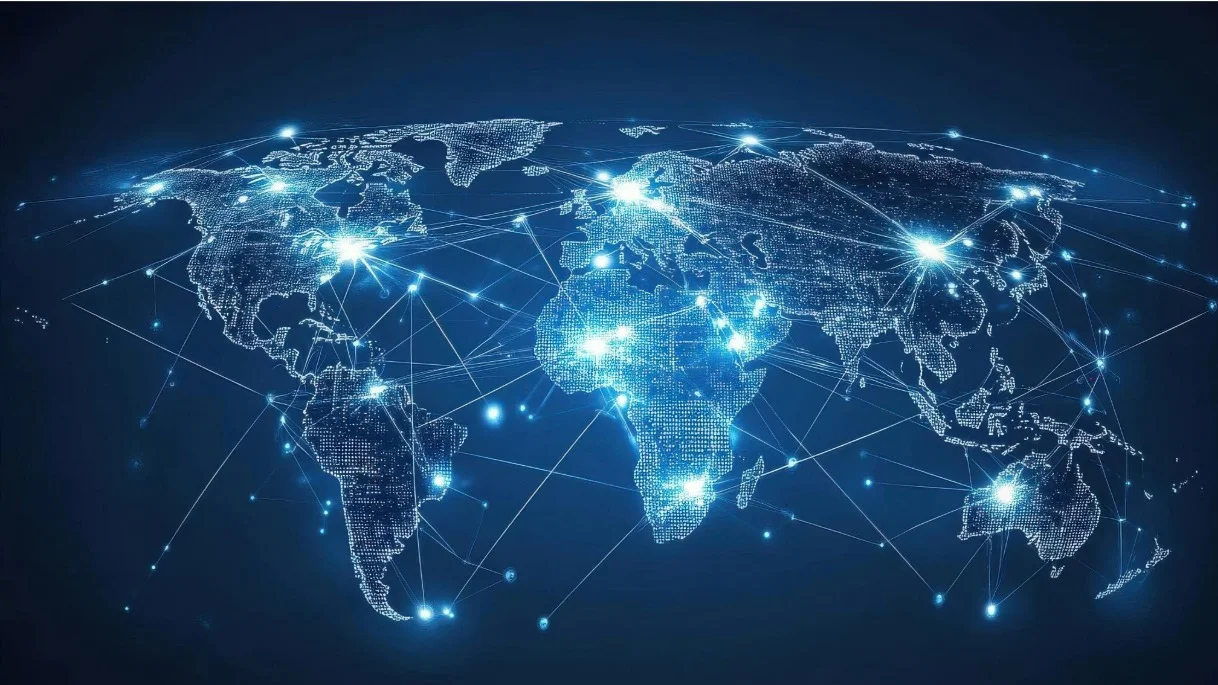
Today, more than 550 submarine cables, stretching around 1.3 million kilometers, serve as information and connectivity highways between countries and continents, carrying significant volumes of international data traffic, including sensitive information. It means that protecting them has become a geopolitical priority.
To that end, on August 7 the U.S. Federal Communications Commission (FCC) pushed through the most far-reaching measures in 20 years to protect undersea cables. The new rules slash approval times that make license applications faster, reduce compliance obligations, cut red tape, and reduce overheads. The move is designed to protect U.S. national security interests and intended to halt the growth of Chinese hyperscale data centers in Asia, many of which are designed for AI purposes. And most of those data centers require powerful undersea cables.
Subsea cables and foreign adversaries
The new measures also tighten security provisions with restrictions placed on leasing to “foreign adversaries,” as well as introducing mandatory cybersecurity and physical protection standards.
The rules have created a formal “presumption of denial” for cable‑landing license applications from designated foreign adversaries and ban the use of equipment listed on the FCC’s Covered List, which imposes a near-complete ban on equipment from Chinese entities such as Huawei, ZTE, China Telecom, and China Mobile.
Notwithstanding U.S. regulatory measures, Asia’s burgeoning digitalization growth means that high-bandwidth connectivity is a priority, and undersea cables currently carry around 95% of international data traffic. According to the Global Digital Inclusion Partnership, these cables are the “backbone of the internet.” Certainly, on an international connectivity basis.
Clearly, undersea cables connect our world today. However, there are easy ways to sabotage submarine cables or use them for potential espionage purposes. They are also prone to accidental damage. In addition, their production and manufacture have a high environmental impact.
A hybrid approach to connectivity: Space and sky
That’s why many nations in Asia are adopting a hybrid approach. During the Cold War, the U.S. realized that laying, maintaining, and repairing submarine cables was not the best solution. Rather, they used radio waves as an alternative, so that if a cable was cut, radio provided an alternative communication channel – given the weeks (or months), and cost, it would take to repair the cable. Radio could be used immediately as a backup to ensure defense-related communications were not disrupted.
At the same time, cable-repairing vessels are currently expensive to maintain and starting to reach end of life. As a result, Asian countries are embracing satellite communications as an alternative to ensure that everything from social media to real-time financial transactions are maintained.
Low-Earth orbit (LEO) satellites, in particular, are gaining traction in the region – not as a competitor to submarine cables, but as a complement. The geography of much of the Asia-Pacific makes cable infrastructure challenging and expensive. In this respect, satellite technology can better serve users in difficult-to-reach areas such as mountains, conflict zones, and archipelagos.
Western satellite companies, such as Starlink, OneWeb, and AST SpaceMobile, recognize the potential, and suggest that LEO can now provide low latency and high bandwidths comparable to most high-bandwidth, land-based services.
Communication satellite launches grow in Asia
China has launched over 400 communication satellites between 20222 and 2024, and has been expanding its subsea cable projects globally.
As in every sector, many Asian countries do not want to rely on a single entity or country, such as China. Instead, they are balancing a thin line between Chinese dominance and Western alternatives.
India, for example, is pursuing interest in both international partnerships and home-grown ventures (PixxelSpace, VI, AST SpaceMobile) to boost satellite communications and connectivity for different sectors, with the ultimate ambition of launching its own LEO constellation. At the same time, new subsea cables have been launched in 2025, while there are calls for more to meet anticipated demand.
Similarly, a consortium led by local Mobile Network Operator Opus is building its own LEO satellite in Australia while the country is exploring opportunities to strengthen its position as a regional digital hub and investing to secure local communications via transcontinental routes to boost resilience.
It's clear that subsea cables and satellites and, more generally, mobile connectivity is vital for not just the Asia-Pacific region, but also the global geopolitical landscape.
Pamir Consulting can help you navigate risks, ensure regional compliance, and optimize market opportunities in the Asia-Pacific.
Contact us today to find out how we can help you traverse this complicated environment.
Screening Is Not Enough: Mapping Supply Chains in China’s Military-Civil Fusion Landscape
Leader of Taiwan’s Opposition Concludes Two-Week Visit to the United States